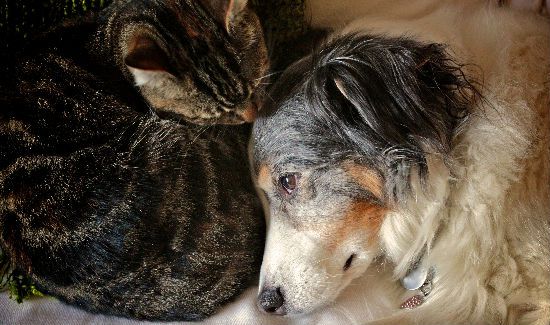
Few things are as tough as watching your pet suffer from arthritis pain. Cat and dog arthritis often causes more discomfort in the colder months of the year, too. So what can you do when your pet starts to show the
symptoms of arthritis, like limping, difficulty laying down or getting up, or even flinching when being touched?
Cat and Dog Arthritis Medicines
Dogs and cats can take non-steroidal anti-inflammatory drugs (NSAIDs) to combat their pain. These medications are of the same class as Aspirin and Ibuprofen that humans take, but they're formulated for pets. Rimadyl, Previcox, Metacam, Novox, and Piroxicam are popular choices. Of these, only Piroxicam is intended for cats. Dogs can also benefit from intramuscular injections or medications injected into your dog's muscles that stop the enzymes that are destroying your dog's cartilage.
Natural Pain Relief for Dogs and Cats
Besides medications, other steps you can take to relieve your pet's arthritis pain are:
1. Provide a quality diet for arthritic pets. Keeping your pet slim as opposed to being overweight will reduce any strain on your pet's joints.
2. Exercise your pet to keep off extra weight. But be aware that strenuous exercise can cause increased stress on their joints. To find the right balance, consider a joint health exercise routine.
3. Give natural supplements like glucosamine and chondroitin for dogs and cats.
4. In the winter, giving your pet a heated bed can help soothe any chill-induced arthritis pain. Coats and doggie jackets for walks are a good idea, too.
Tell Me More
Learn more about cat and dog arthritis causes and treatments.
Herbal Remedies for Inflammation and Joint Pain in Pets
If your pet has joint pain, then medical supplements like glucosamine and fish oil are the best course of treatment. However, using botanicals along with pharmaceuticals can highly benefit some animals suffering from osteoarthritis. Multi-modal therapy is extremely effective at combating pain at many different levels. It goes without saying that you need to check with your pet's vet before you start botanical therapy. After all, botanicals are drugs that are waiting to be refined into a purer pharmaceutical form.
- Turmeric – This is quite possibly the most widely used medicinal herb for treating inflammation and joint pain. Curcumin, the active ingredient in turmeric, is a powerful antioxidant. They neutralize the free radicals responsible for causing painful inflammation and joint damage. A high dose of turmeric acts as a blood thinner and can lead to an upset stomach. So, you need to consult with a veterinarian before you start administering turmeric to your pet. As a rule of thumb, the suggested dosage is 15mg per pound of body weight.
- Boswellia serrata – The resin of this herb has been used in traditional medicines for centuries. Recent lab research has demonstrated that Boswellia serrata inhibits the production of particular leukotriene, which is responsible for modulating the immune response of the body to inflammation. Although more clinical research needs to be done on this herb, preliminary in vitro studies clearly show that the herb has a positive effect on the body as a whole. The best part is that there are no known side effects to the compound. So, you can treat your dog with a formulation made for humans as long as it is free from other compounds. The typical dosage is 6mg per pound of body weight.
- Cinnamon – Cinnamon is known to help with a wide variety of disease conditions like IBD, diarrhea, stomach cramps as well as joint pain and inflammation. The anti-inflammatory properties of the herb will slow down joint tissue degeneration. If your dog weighs 50 pounds, then add ¼ teaspoon of cinnamon to his food daily for a couple of weeks. If it shows beneficial results by relieving arthritic pain, then you can continue the regimen. However, if your dog is about to undergo surgery, then you need to discontinue the treatment at least two weeks before the surgery, as cinnamon thins the blood and causes increased bleeding.
- Hawthorn – Hawthorn helps to stabilize collagen, the protein in the joints that are destroyed by inflammatory processes. Hawthorn also helps to increase circulation, thereby ridding the body of toxin buildup in the joints. Please note that Hawthorn can interact with drugs that are designed to treat heart disease. So, speak to your vet before you start administering Hawthorn to your pet.
Frequently Asked Questions
What is a good medication for a cat with arthritis?
There are several medications that a veterinarian may prescribe to alleviate the symptoms of arthritis in cats. Nonsteroidal anti-inflammatory drugs (NSAIDs), such as meloxicam, carprofen, and deracoxib, can help to reduce inflammation and pain in cats with arthritis. These medications are available only with a prescription and should be given under veterinary supervision as they can have side effects. Glucosamine and chondroitin supplements are often used as a long-term treatment for arthritis in cats. They can help to rebuild cartilage and reduce inflammation. Corticosteroids, such as prednisone, can be prescribed by a veterinarian to help reduce inflammation and pain. However, long-term use of corticosteroids can have adverse side effects, so their use should be closely monitored by a veterinarian. It is important to consult with a licensed veterinarian for appropriate treatment of your cat's arthritis. Solensia (frunevetmab injection) is the first monoclonal antibody therapy approved by the U.S. Food and Drug Administration (FDA) for the treatment of pain associated with osteoarthritis in animals. It works by blocking the activity of nerve growth factor (NGF), which is involved in pain signaling and inflammation. As a monoclonal antibody therapy, Solensia is a targeted treatment that specifically binds to and neutralizes NGF, resulting in reduced pain and inflammation in animals with osteoarthritis. Solensia is administered as an injection by a licensed veterinarian, and the dosage and frequency of administration will depend on the individual pet’s needs.
Can cats and dogs take the same pain medication?
Not necessarily. While there are some pain medications that are safe for both cats and dogs, many of these medications have different dosages and different effects in each species. Therefore, it is important to only give pain medication to your pet that has been specifically prescribed by a veterinarian for that particular species and to follow the dosing instructions carefully. Some human pain medications, such as ibuprofen and acetaminophen, can be toxic to pets and should never be given to cats or dogs. Other pain medications, such as aspirin or tramadol, may be safe for one species but not the other, and their dosages may vary depending on the size, age, and medical history of the animal. In general, it is always best to consult with a licensed veterinarian before giving any pain medication to your pet. They can help to determine the most appropriate medication and dosage based on your pet's individual needs and medical history and can also monitor for any potential side effects or complications.
Which is better for dogs, Galliprant or gabapentin?
Galliprant and gabapentin are both medications used to treat different types of pain in dogs, but they work in different ways and are not directly comparable. Galliprant (Grapiprant) is a nonsteroidal anti-inflammatory drug (NSAID) that specifically targets a type of inflammation-causing enzyme called prostaglandin E2 (PGE2). It is commonly used to treat pain and inflammation associated with osteoarthritis in dogs. Galliprant is administered orally and is available only with a prescription from a licensed veterinarian. Gabapentin, on the other hand, is an anticonvulsant medication that is sometimes used off-label for the treatment of chronic pain in dogs. It works by affecting the transmission of certain nerve signals in the brain and spinal cord. Gabapentin is also administered orally and is available only with a prescription from a licensed veterinarian. The choice between Galliprant and gabapentin (or any other pain medication) will depend on the underlying cause of the dog's pain, as well as the individual dog's medical history and response to treatment. In some cases, a veterinarian may prescribe both medications together to achieve the best pain relief for the dog.
Does CBD work for cats with arthritis?
While there is some anecdotal evidence to suggest that CBD (cannabidiol) may be helpful in treating pain and inflammation associated with arthritis in cats, there is currently very little scientific research to support these claims. CBD is a compound derived from the hemp plant, and it has been shown to have anti-inflammatory and pain-relieving properties in humans and some animal species. However, the effects of CBD on cats, and the appropriate dosage and administration of CBD for cats with arthritis, are not well understood. It is important to note that the use of CBD in pets is currently unregulated, and there are few standardized products or dosing guidelines available. If you are considering using CBD for your cat's arthritis, it is important to consult with a licensed veterinarian first. They can help you determine whether CBD is a safe and appropriate treatment option for your cat and can provide guidance on dosage and administration.
Can gabapentin be used for dogs and cats?
Yes, gabapentin can be used for both dogs and cats. Gabapentin is an anticonvulsant medication that is also used to treat chronic pain in both species. It works by affecting the transmission of certain nerve signals in the brain and spinal cord, which can help to reduce pain and discomfort. In dogs, gabapentin is commonly used to manage pain associated with osteoarthritis, as well as for the management of chronic neuropathic pain. In cats, gabapentin is often used to manage chronic pain associated with conditions such as osteoarthritis, interstitial cystitis, and dental disease. The dosage and administration of gabapentin will depend on the individual animal's medical history and condition, as well as its size, age, and other factors. As with any medication, gabapentin can have potential side effects in both dogs and cats, such as sedation, dizziness, and loss of coordination. It is important to only give gabapentin to your pet under the guidance of a licensed veterinarian and to follow their instructions carefully.


