How to Calm Down a Puppy
What is the best way to calm down a puppy? Positive reinforcement with healthy treats such as Stella and Chewy Beef Treats and a calming attitude. Yelling at your pup or negatively reinforcing their behavior won’t make them calm down any faster, and it will do more harm than good in the long run. Instead of negatively reacting to your puppy’s unwanted behavior (i.e., being hyper), focus on providing positive reinforcement when they are calm. Using the techniques posted on this page will teach your puppy (or fully grown dog) to be calmer, less hyper, and easier to deal with.
Do you know what your dog’s personality type is? You should! Dogs, unlike humans, only have two defined personality types: active and passive.
Knowing what category your dog belongs to is critical because the two types react differently to new situations and new people, as well as commands, cues, and greetings.
For example, if your dog is passive, you will want to be very expressive and energetic and use a lot of emotion when teaching a new command. However, if your dog has an active personality, you will want to be quiet, firm, and relaxed when you are teaching a new command.
How do you know if your dog is an active or passive personality? Although there are several factors to consider when determining your dog’s personality type, such as age and the time of day, the following example will help you to recognize some key characteristics of each personality.
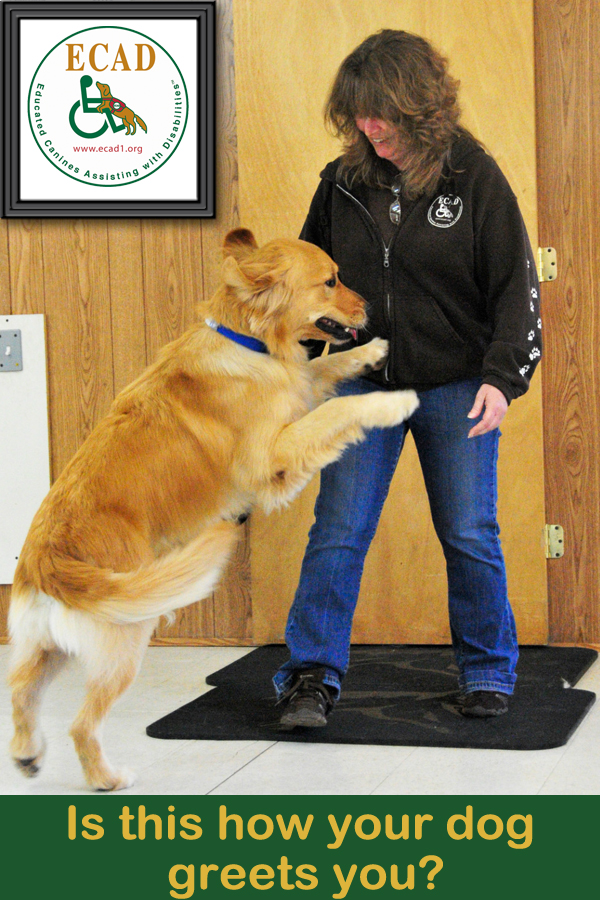
When you return home from work or running errands, how does your dog react? Do they greet you by jumping all over you, spinning around and running all over the house, or any combination of high-energy reactions? Or do they mosey over, wagging their tail low, dropping their head, and brushing up against you, showing that they are happy but not overjoyed to see you?
If your dog reacts more like the first scenario, they probably have a more active personality. The second scenario is how a passive personality would react.
The “Settle” command may seem more applicable to an active personality, but ECAD finds the use of this command can come in handy in various situations with both personality types.
Command 8 – Settle
“Settle,” tells your dog to relax, calm down, and focus.
When to use
Anytime your dog is acting too excited, playing too rough, or is not cooperating with you.
Teaching Method
The best time to teach this command is during situations when you need your dog to be still. For instance, use “Settle” during grooming sessions when your dog will not settle, when your puppy is playing too rough, or when their behavior is just simply not appropriate.
When such a situation occurs, repeat the command “Settle” in a soothing, no-nonsense tone. It’s important to say the command without begging and not to touch, praise, or engage with your dog until they have regained its composure.
Once your dog has calmed down, praise them softly and pet them slowly. Remember, if you are excited, your dog will feed off this energy and think the excited behavior is what you are expecting and rewarding.

If your dog’s reaction to your soft praise and petting causes them to get excited again, stop what you are doing and repeat the command “Settle” again in a soothing, no-nonsense tone. This time, when your dog begins to relax, repeat, “That’s it…settle...that’s it” in a soft and soothing tone while you pet them slowly.
Once your dog has remained calm for 5 seconds, ECAD recommends taking your pet outside to let them burn off some energy. This is a rewarding activity and will reinforce the idea of when it is appropriate for your dog to be calm compared to when they are free to run and play.
Frequently Asked Questions
How do you calm a hyper dog down?
There are several strategies that you can try to calm down a hyperactive dog. A hyper dog may have pent-up energy that needs to be expended. You can take them for a long walk or play with them to tire them out. Giving your dog puzzle toys or teaching them new commands can keep their mind busy and help them calm down. Some dogs may benefit from natural calming supplements like chamomile or valerian root. Consult with your veterinarian before giving your dog any supplements. Massaging your dog can help them relax and reduce anxiety. The use of essential oils such as lavender or chamomile can also help calm down an anxious dog. Dogs thrive on routine, so maintaining a consistent schedule can help them feel secure and reduce anxiety. Basic obedience training can help teach your dog self-control and improve its behavior.
At what age do dogs calm down?
The age at which dogs calm down can vary depending on their breed, size, and individual personality. Generally, dogs reach maturity at around 1 year of age, and many breeds will start to settle down and exhibit less hyperactivity and destructive behavior around this time. However, some breeds may maintain a high energy level and playful demeanor throughout their entire lives. Providing your dog with regular exercise, mental stimulation, and training can help manage their behavior and energy levels regardless of their age.
How do I train my dog to be quiet?
Training a dog to be quiet can take time and patience, but here are some steps you can take to teach your dog to be quiet. Figure out what makes your dog bark excessively. Is it the doorbell, strangers, other dogs, or something else? Sometimes, dogs bark for attention. If your dog is barking for attention, do not respond to their barking. Wait until they are quiet before giving them any attention. When your dog barks, say "quiet" in a calm and firm tone. When they stop barking, praise them and offer a treat. Repeat this exercise regularly, gradually increasing the amount of time they need to be quiet before receiving praise or a treat. Praise and reward your dog when they are quiet. This will reinforce their quiet behavior and encourage them to be quiet in the future. Consistent training is key to success. Practice the "quiet" command regularly in different situations to help your dog generalize the behavior. If your dog's excessive barking is due to anxiety, fear, or other behavioral issues, consider consulting with a professional dog trainer or behaviorist who can help address these underlying issues.
At what age do dogs misbehave?
Dogs go through a rebellious "teenager" phase, typically between 5 months to 18 months of age, where they may test their owners and push boundaries. This is a natural part of their development as they explore their environment and learn about their place in the social hierarchy. During this phase, it's necessary to continue with consistent training and socialization to help prevent or address any undesirable behaviors. Positive reinforcement training, in particular, can be effective in teaching dogs what is expected of them and encouraging good behavior. It's also crucial to be patient and understanding during this phase, as dogs are still learning and may make mistakes. With consistent training and positive reinforcement, most dogs will outgrow their rebellious phase and develop into well-behaved adult dogs.
Can I spray my dog with water?
Spraying a dog with water can be an effective way to redirect their attention or discourage undesirable behavior, such as jumping or barking. However, it's important to use this method with caution and only in certain situations. Spraying a dog with water can startle or frighten them, which may damage the trust and bond between you and your dog. Therefore, it's important to avoid using this method as a punishment or as a way to discipline your dog. Instead, you can use a spray bottle filled with water as a deterrent when your dog is exhibiting undesirable behavior. For example, if your dog is jumping on guests, you can use the spray bottle to redirect their attention to appropriate behavior, such as sitting. It's important to pair the spray bottle with positive reinforcement, such as treats or praise when your dog exhibits good behavior.
Last Week’s Lesson
How to Get Your Dog to Come
Next Week’s Lesson
How to Teach Your Dog to Fetch
Back to 20 Dog Commands You Need to Know
Get 20 Commands Delivered in 10 Weeks!
Sign up today and get two training tips a week from the expert trainers at ECAD, delivered right to your inbox.
All training tips in this series are from ECAD (Educated Canines Assisting with Disabilities), a non-profit organization dedicated to training service dogs for veterans with disabilities. Learn more about ECAD.


